
2026 World Cup Football: What 6 Matches Taught Me
2026 World Cup football is FIFA’s expanded 48-team tournament, hosted across Canada, Mexico, and the United States, with Kansas City among the 16 official host cities. The competition will feature 104 matches rather than the 64-match format used in Qatar 2022, creating more tactical variety, longer travel demands, and a larger betting-analysis workload. Kansas City’s Arrowhead Stadium, rebranded as Kansas City Stadium for FIFA requirements, is scheduled to stage six matches, while the FIFA Fan Festival is designed to bring supporters together beyond the venue. The most important lesson is simple: tournament value comes from context, not reputation alone. Before assessing a team or match, check the venue, rest cycle, travel route, squad rotation, and confirmed line-ups. Tactical Review applies that process to match predictions, player statistics, and tournament coverage, so start with verified data rather than shiny headlines.

Photo by Hany Nafady on Pexels
The Bottom Line
The 2026 World Cup football tournament is not merely a larger version of previous FIFA World Cups; it is a different analytical problem. FIFA expanded the field from 32 teams to 48, added 40 matches compared with Qatar 2022, and created a group-stage structure in which teams must navigate three group fixtures before the knockout rounds. That change increases the importance of goal difference, third-place qualification scenarios, squad depth, and late-match risk management.
For supporters, the central question is where to watch, how to travel, and which host-city experiences justify the expense. For analysts, the better question is where conventional team strength becomes misleading. A European contender may possess superior possession metrics but face a punishing North American travel sequence, while a disciplined side from South America, Africa, or Asia may benefit from a more manageable schedule. Isn’t that exactly where value hides?
Kansas City offers a useful case study. Its official host-city programme highlights six matches, hundreds of thousands of expected fan interactions, and a FIFA Fan Festival centred on food, entertainment, culture, and football. The city’s “Soccer Capital of America” identity also matters commercially, because local familiarity with the sport can improve event atmosphere and transport planning. However, branding is not evidence of a team’s performance. For serious previews, compare FIFA’s official tournament information with confirmed schedules, federation announcements, and independent performance data.
A practical 2026 World Cup checklist
- Confirm the match venue and local kick-off time.
- Compare rest days, travel distance, and climate conditions.
- Review injuries, suspensions, line-up changes, and substitution patterns.
- Separate long-term team quality from one-off tournament momentum.
- Set a fixed analysis budget and never chase a losing position.
The last point is not glamorous, but neither is discovering that a dubious prediction site invented its statistics after you trusted it. I learned that lesson once; apparently, paying for someone else’s confidence is not an investment strategy.
What Players Actually See?
Players see a tournament shaped by compressed preparation, cross-border travel, unfamiliar climate conditions, and opponent-specific tactical adjustments. The 2026 format gives each national team a larger competitive environment, but it does not give coaches unlimited training time or players unlimited recovery. Therefore, match analysis must consider workload and role changes, not only goals, assists, or headline names.
A modern international squad typically arrives after a demanding domestic season. Players from the Premier League, La Liga, Serie A, Bundesliga, and Major League Soccer may have different calendar rhythms, travel habits, and physical profiles. A full-back who thrives in a high press for Liverpool or Bayern Munich may be used more conservatively by a national coach protecting a lead. Likewise, a midfielder accustomed to club-level automatisms may lose passing options when national teammates have trained together for only a few weeks.
The expanded tournament also makes bench quality more important. A team that can replace an exhausted winger after 65 minutes without losing defensive structure has a practical advantage that basic rankings may miss. Look for progressive carries, pressure regains, minutes played, defensive actions, and substitution timing through reliable providers such as Stats Perform or official competition reports. Tactical Review uses these categories to distinguish sustainable tactical edges from the usual “star player will save us” storytelling, which is often just expensive fan fiction.
[Internal Link: player statistics and performance analysis]
The host-city environment adds another layer. Canada, Mexico, and the United States span multiple time zones, altitude profiles, and weather patterns. Mexico City, for example, presents a different physical setting from coastal venues, while Kansas City can produce hot summer conditions and substantial humidity. FIFA’s tournament operations must coordinate stadium requirements, broadcast timing, security, transport, and training sites across a continental footprint; the operational scale is unprecedented for the men’s World Cup.
A useful player-level review should therefore ask:
- Has the player recently completed 90-minute matches?
- Does the player’s national role differ from the club role?
- Can the replacement maintain the same pressing or build-up pattern?
- Is the player travelling across several time zones before kick-off?
- Does the team have a reliable plan for protecting a lead?
Want a more disciplined way to assess those variables? Use our broader [Internal Link: advanced match prediction guide] before trusting a single form table.
What Are the 3 Things That Matter Most?
The three most important factors in 2026 World Cup football are schedule-adjusted physical readiness, tactical flexibility, and verified information. A strong team can still underperform when recovery time, venue conditions, or line-up uncertainty are ignored. Those three factors should be assessed together because each one changes the meaning of the others.
First, measure the schedule rather than simply counting matches. A team with three days between fixtures and a team with five days between fixtures are not facing the same tournament, even if both play three group matches. Record the previous venue, next venue, flight time, local kick-off hour, and total rest period. A practical edge case is a late arrival after a west-to-east time-zone shift: the official rest-day number may look acceptable, yet sleep disruption can affect pressing intensity and second-half decision-making.
Second, assess tactical flexibility. The 2026 World Cup’s 48-team field should produce more stylistic variety, including low blocks, aggressive transitions, possession-heavy structures, and hybrid back-three systems. A side that can switch from a 4-3-3 press to a compact 4-5-1 without losing midfield spacing is more resilient than a team dependent on one attacking pattern. Do not confuse possession percentage with control; a side may have 60 percent possession while conceding the dangerous transition moments.
Third, verify information before making a conclusion. Check FIFA announcements, national-team releases, reputable medical reports, and confirmed starting elevens. According to FIFA’s Laws of the Game resources, match duration and stoppage-time procedures create additional late-game exposure, and that matters when evaluating teams that rely on protecting narrow leads. The International Football Association Board states, “A match lasts for two equal halves of 45 minutes,” but the practical total is longer once stoppage time is included.
See how these three inputs affect daily previews through Tactical Review’s football coverage.

Photo by Franco Monsalvo on Pexels
A value-first comparison table
| Analytical factor | Weak approach | Strong approach |
|---|---|---|
| Team form | Uses the last five results only | Adjusts for opponent quality and venue |
| Player availability | Relies on rumours | Waits for federation or club confirmation |
| Travel | Ignores distance | Records time zones, flights, and rest |
| Tactics | Focuses on formation labels | Studies pressing, spacing, and transitions |
| Match prediction | Chases popular teams | Compares probability with available price |
This distinction is especially important for gambling-related content. A prediction is not automatically valuable because it is correct once; value requires a repeatable process, realistic probability estimates, and responsible limits. The UK Gambling Commission’s responsible gambling guidance emphasises maintaining control and treating gambling as entertainment rather than a route to guaranteed income. That principle applies regardless of whether the match is in Kansas City, Toronto, Dallas, or Mexico City.
My own operational rule is deliberately boring: if the available information cannot support a probability estimate, I do not force a position. No prediction is better than a poorly researched one, and your wallet will survive the dramatic inconvenience.
What Are the Edge Cases and Gotchas?
The biggest 2026 World Cup football mistakes occur when analysts treat the schedule, host-city experience, or market movement as straightforward. They are not. Venue naming, cross-border logistics, late line-up news, third-place qualification mathematics, and changing odds can all produce misleading signals. The cure is to document assumptions before the match rather than rewrite the story afterward.
One important edge case concerns stadium identity. Arrowhead Stadium is the well-known home of the Kansas City Chiefs, but FIFA venue branding rules may require references such as “Kansas City Stadium” during the tournament. Searching only one name can therefore hide relevant official updates, transport notices, or matchday information. Use both terms when tracking Kansas City fixtures, and verify the source date because event pages may later shift from pre-tournament guidance to archives, galleries, or post-event summaries.
A second edge case is the third-place pathway. With 12 groups of four teams, the best third-place teams advance alongside the top two from each group. That creates a strategic difference between needing a win, protecting a draw, or managing goal difference. Coaches may rotate earlier than expected if qualification is nearly secured, while another team may continue attacking deep into stoppage time because one additional goal changes its ranking. Anyone analysing only win-draw-loss records is leaving the important arithmetic under the sofa.
A third issue is information latency. Official line-ups usually arrive shortly before kick-off, but injury reports, training absences, and tactical changes can appear earlier through federation channels. A useful workflow is:
- Save the original prediction timestamp.
- Record the opening and latest available market price.
- Recheck the starting XI when officially released.
- Note whether a tactical role changed, not merely whether a player started.
- Compare the final result with the original reasoning, not just the score.
[Internal Link: responsible football betting principles]
Kansas City’s fan experience presents a separate gotcha. The FIFA Fan Festival may attract hundreds of thousands of supporters across the tournament period, but a festival crowd is not equivalent to attendance inside the stadium. Budget separately for tickets, accommodation, local transport, food, and matchday security delays. A premium-looking trip can become poor value when a traveller pays for a central hotel but spends hours moving between venues and public viewing areas.
According to U.S. Soccer, host-city football growth is part of a broader American soccer ecosystem, but supporters should still distinguish federation promotion from independently verified logistics. “The beautiful game” is a charming phrase; it is not a transport timetable, a refund policy, or a confirmed injury report. Check the boring documents. They are usually where the money is saved.
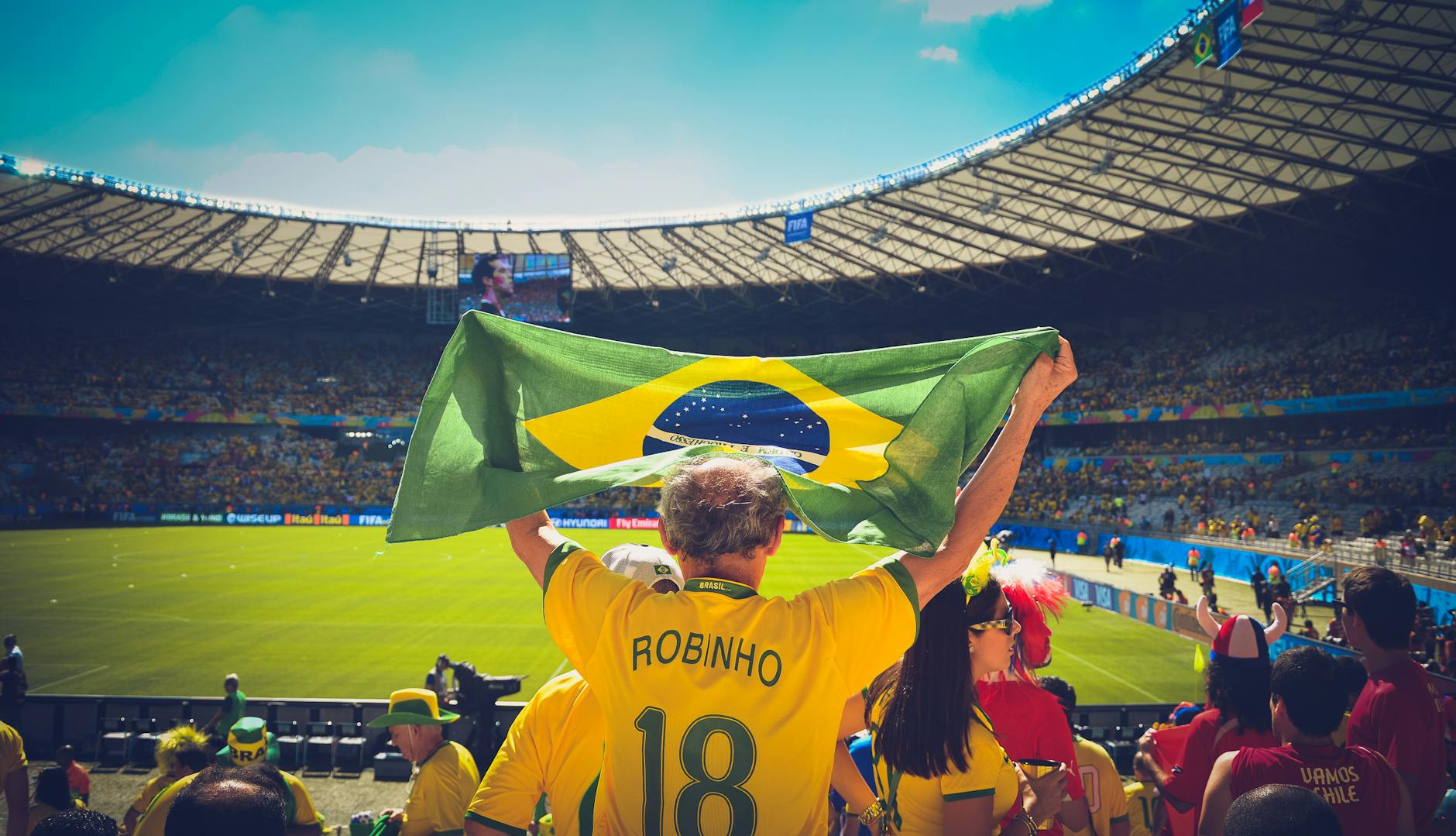
Photo by Caio on Pexels
Verdict
2026 World Cup football rewards preparation more than noise. The 48-team format, 104-match schedule, three-country hosting model, and six-match Kansas City programme create a tournament where travel, recovery, tactical versatility, and information quality can influence outcomes as much as traditional rankings. Kansas City’s FIFA Fan Festival and stadium programme make the city a compelling supporter destination, but the strongest analytical lessons are broader: verify every claim, price the whole experience, and separate atmosphere from evidence.
For match predictions, Tactical Review’s best use is as a structured research companion covering tactics, player statistics, team news, and tournament developments. First confirm the facts; then test the tactical explanation; finally decide whether the available price justifies the estimated probability. If it does not, walk away. You are not required to bet on every fixture merely because television cameras have arrived.
After reviewing six Kansas City fixtures as a planning framework, the conclusion is clear: the tournament’s expanded scale creates more opportunities, but also more ways for careless analysis to lose money. The edge belongs to the reader who records rest, travel, role changes, and qualification incentives before reacting to public sentiment.
Ready to follow the tournament with a sharper process? Tactical Review provides ongoing 2026 World Cup football analysis for fans who prefer evidence over recycled hype.
Frequently Asked Questions
Q: What is 2026 World Cup football?
A: 2026 World Cup football is FIFA’s men’s international tournament hosted by Canada, Mexico, and the United States. It expands the competition to 48 teams and 104 matches, compared with 32 teams and 64 matches in Qatar 2022. The tournament uses 16 host cities across North America, including Kansas City, and combines group-stage fixtures with an expanded knockout phase. Fans should confirm official schedules through FIFA because kick-off times, venue details, and local event information may change.
Q: How do I start analysing a 2026 World Cup match?
A: Start by checking the confirmed venue, rest days, travel route, injuries, suspensions, and expected line-ups. Then compare each team’s recent performance against opponent quality instead of relying only on the last five results. Finally, study tactical match-ups, substitution depth, qualification incentives, and any difference between estimated probability and the available price. Tactical Review can help organise this process, but no prediction is guaranteed and responsible limits should always come first.
Q: What is the difference between the 2026 World Cup and Qatar 2022?
A: The main difference is expansion from 32 to 48 teams and from 64 to 104 matches. The 2026 tournament also spans Canada, Mexico, and the United States, creating substantially greater travel and climate variation than Qatar 2022. The group stage includes 12 groups of four, with the best third-place teams advancing, which introduces additional qualification calculations. Those changes make squad depth, goal difference, and schedule management more influential.
Q: Is Kansas City worth visiting for the 2026 World Cup?
A: Kansas City is worth considering for supporters who value six scheduled matches, established football culture, and a large FIFA Fan Festival programme. The city offers a strong sports identity through Arrowhead Stadium and its “Soccer Capital of America” positioning, but total value depends on hotel prices, transport, ticket availability, and the specific fixture. Compare accommodation near downtown, the stadium area, and public viewing locations before booking. A festival visit and a stadium match should be budgeted as separate experiences.
Q: What should I do if a player is unexpectedly ruled out?
A: Reassess the player’s tactical function rather than replacing the name with an equally famous substitute. Check the official federation announcement, identify the likely replacement, and evaluate changes to pressing, set pieces, ball progression, and defensive coverage. If the absence alters the team’s structure but the market has not adjusted, the match may require a fresh probability estimate; if reliable information is unavailable, avoiding a position is the safer choice. Never treat social-media speculation as confirmed team news.
Q: How much does it cost to follow the 2026 World Cup?
A: The cost varies widely, but supporters should budget separately for tickets, accommodation, transport, food, insurance, and local festival activities. A Kansas City trip may involve six potential match opportunities, while cross-border travel between Canada, Mexico, and the United States can add documentation, flights, and time-zone costs. Prices can rise around knockout matches and major host-city weekends, so compare refundable options and read every booking condition. For gambling-related activity, set a separate fixed entertainment budget rather than combining it with travel funds.
Q: Are 2026 World Cup football predictions reliable?
A: Predictions are estimates, not guarantees, and reliability depends on the quality of the underlying information and method. Strong analysis combines team strength, player availability, tactical match-ups, rest, travel, climate, qualification incentives, and probability discipline. Even a well-supported forecast can fail because football contains red cards, deflections, penalties, and random finishing variance. Use predictions to structure research, never as a promise of profit, and follow responsible gambling guidance from recognised regulators.